Can this Really Work For Me?
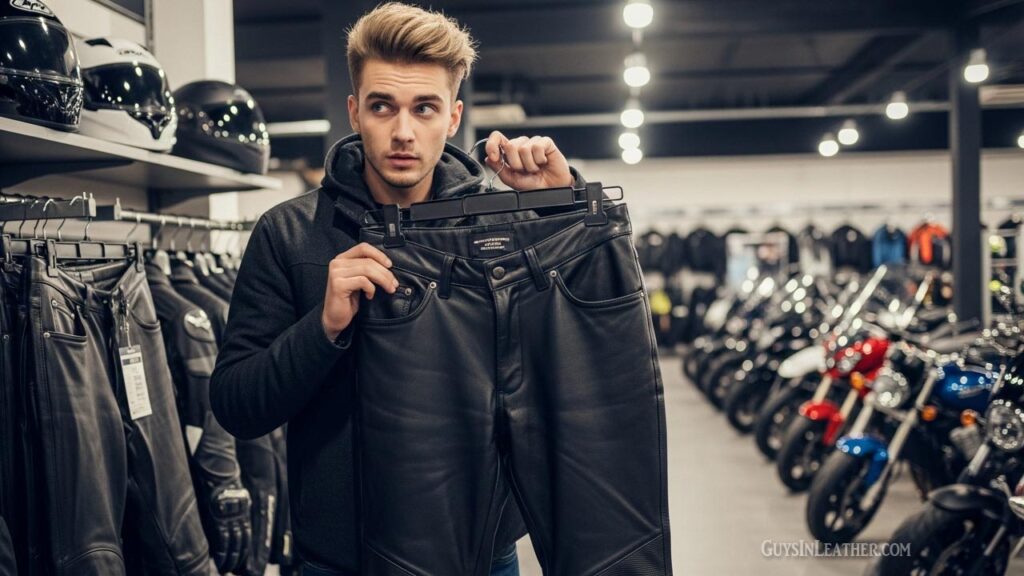
For many men, leather pants exist in a strange psychological space. They look great on other people—rock musicians, motorcyclists, actors, or confident guys in nightlife settings. They project confidence, individuality, and a certain adventurous spirit. Yet when the average person imagines wearing them in everyday life, hesitation sets in almost immediately.
What will people think?
Will I stand out too much?
Will it look like I’m trying too hard?
This tension creates a paradox. On one hand, fashion culture celebrates individuality and self-expression. On the other hand, most people are deeply aware of the social signals their clothing sends. No one wants to feel isolated or judged simply for experimenting with personal style.
Psychologically, this concern is completely normal. Human beings are wired to monitor social acceptance. Clothing is one of the most visible signals we send to others, and even subtle changes can trigger anxiety about how we will be perceived.
The good news is that social perception is far more flexible than it initially appears. Research in psychology shows that people gradually adjust to unfamiliar styles through exposure, context, and consistent identity cues. In other words, bold clothing rarely becomes accepted instantly—but it often becomes accepted over time.
Understanding how this process works can make the difference between feeling awkward in leather pants and wearing them naturally as part of your everyday style.
Clothing as Social Communication
Fashion often feels like a purely aesthetic choice, but psychology tells a different story. Clothing operates as a social signal, influencing how others categorize us, predict our behavior, and decide whether we “fit” within a social environment. Research in social signal processing shows that clothing communicates cues about personality traits, social group membership, and lifestyle, shaping how observers evaluate individuals even when no other information is available (Vinciarelli et al., 2009).
When a man chooses something as bold as leather pants, the question is not simply whether people like the garment. The deeper issue is how observers interpret the signal.
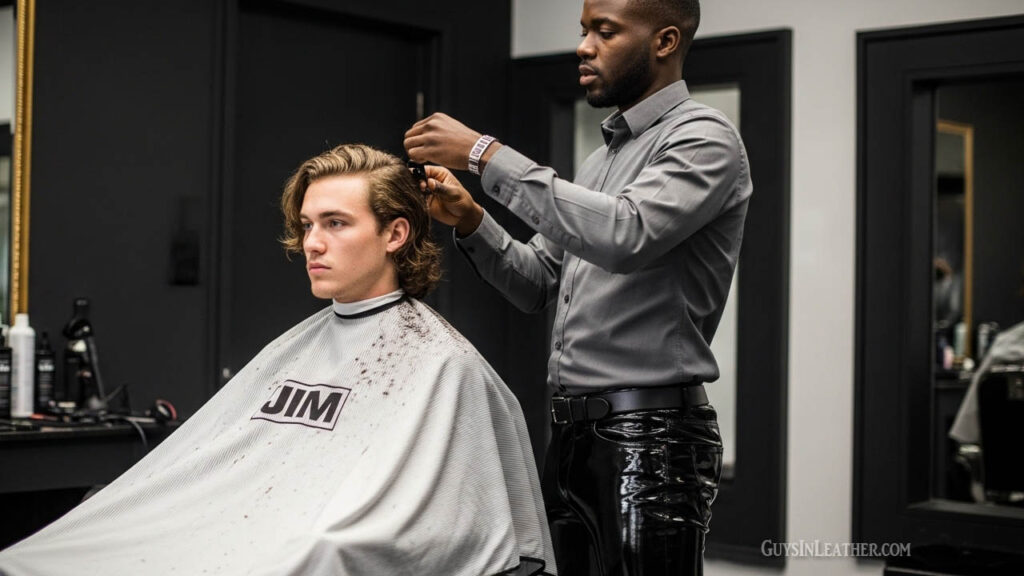
Leather pants carry strong cultural associations—rock musicians, nightlife fashion, motorcyclists, and performers. If the wearer does not obviously belong to those categories, observers may initially struggle to place the signal. This moment of uncertainty is where most social discomfort originates.
Fortunately, human perception is highly adaptable.
The Mere Exposure Effect: Familiarity Creates Acceptance
One of the most powerful forces in social perception is the mere exposure effect, first identified by psychologist Robert Zajonc in 1968. His research demonstrated that people tend to develop preferences for things simply because they encounter them repeatedly (Zajonc, 1968).
Repeated exposure increases what psychologists call perceptual fluency—the ease with which the brain processes information. When something becomes easier to process, people tend to interpret that ease as familiarity and comfort.
This principle explains how many fashion trends become normalized.
The first time someone sees leather pants in an everyday setting, they may feel unusual or surprising. But if the same person wears them occasionally and consistently, observers gradually incorporate that look into their mental model of that individual.
Eventually the reaction shifts from:
“Why is he wearing those?”
to
“That’s just his style.”
Normalization happens not through persuasion but through familiarity.

Gradual Style Change: The Power of Incremental Shifts
Because human perception adapts slowly, abrupt changes in appearance can create social resistance. When someone radically alters their style overnight, observers may interpret the shift as artificial or experimental.
Psychologically, a more effective approach is incremental change.
Small adjustments allow observers to update their expectations gradually. Examples include:
- transitioning from loose denim to slim dark jeans
- replacing sneakers with boots
- incorporating a leather jacket or textured outerwear
- experimenting with monochrome outfits
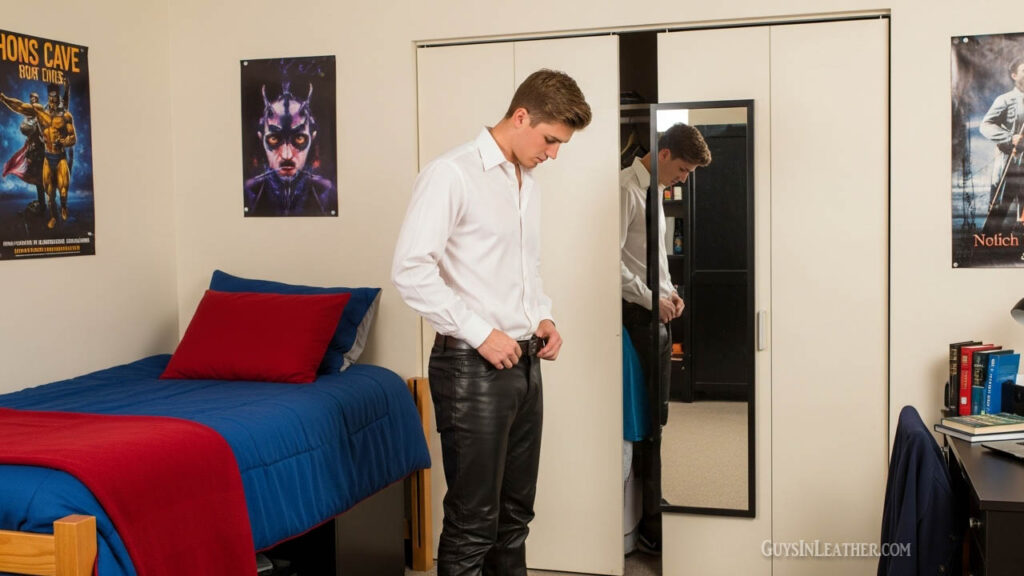
Each step subtly shifts how others categorize your personal style. By the time leather pants appear, they feel like a logical extension of an already evolving aesthetic.
This is how fashion trends spread culturally as well—rarely through sudden transformation, but through gradual visual shifts that slowly redefine what feels normal.
Context and Social Schemas
Human beings rely on mental shortcuts known as schemas to interpret social information quickly. Schemas help us categorize people based on clothing, behavior, and environment.
For example:
- leather jacket + motorcycle → biker culture
- leather pants + stage performance → musician
- leather fashion + nightlife → urban style scene
When clothing fits a recognizable schema, observers process it easily.
But when clothing appears outside of any recognizable context, the brain struggles to interpret the signal.
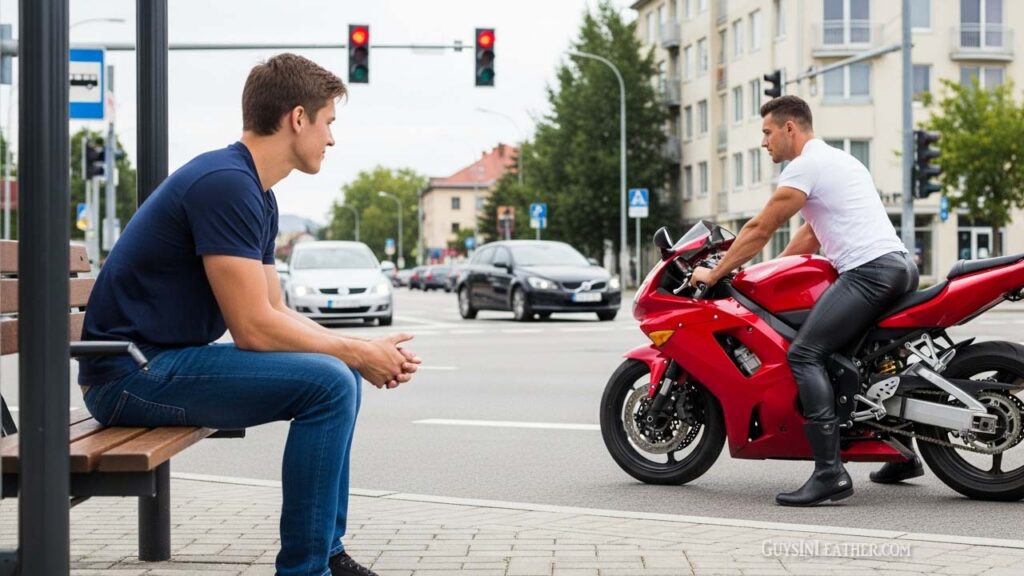
This is why environment matters. Settings that already support expressive fashion include:
- concerts and music venues
- nightlife districts
- urban creative communities
- travel environments and road trips
- artistic or performance spaces
Within these environments, leather pants do not feel unusual because they already exist within the visual vocabulary of the space.
Lifestyle Alignment: When Identity and Clothing Match
Another major factor in fashion acceptance is perceived authenticity.
Psychologically, people look for congruence between appearance and behavior. When clothing matches a person’s activities or lifestyle, observers perceive it as genuine.
For example:
- A musician wearing leather pants on stage appears natural.
- A motorcyclist wearing leather gear appears practical.
- An artist or photographer wearing expressive clothing fits a creative stereotype.
The clothing reinforces an already visible identity.
This is why lifestyle choices can help support bold fashion. Activities involving performance, presence, or expressive culture often provide natural outlets for distinctive clothing.
Examples include:
- playing music or performing
- motorcycling and road travel
- photography or creative arts
- nightlife hosting or DJ culture
- public speaking or entertainment work
When clothing aligns with lifestyle, it stops looking like a costume and starts looking like identity.
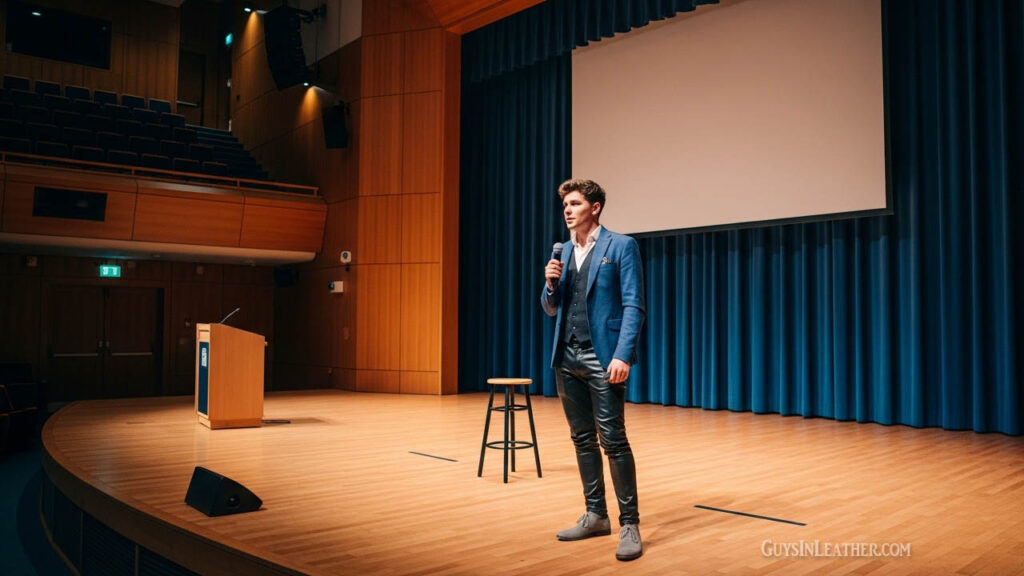
Impression Formation: Warmth and Competence
Psychological research on first impressions consistently shows that people evaluate strangers along two primary dimensions:
- Warmth — friendliness and approachability
- Competence — confidence and capability
(Fiske, Cuddy, & Glick, 2007)
Even unusual clothing tends to be accepted when the wearer signals both qualities.
Body language plays a major role:
- relaxed posture
- natural eye contact
- calm confidence
- casual conversation
These signals reassure observers that the clothing choice is deliberate and comfortable.
In contrast, visible self-consciousness can amplify attention to unusual clothing. When someone appears unsure about their own appearance, observers are more likely to interpret the outfit as experimental.
Confidence reframes the signal.
The Power of Repetition in Social Norms
Repeated exposure does more than normalize individual style—it can also reshape perceptions of social norms.
Research in social psychology shows that frequently encountering a behavior can make people assume it is more common and socially accepted than it actually is (Weaver, Garcia, Schwarz, & Miller, 2007).
This is how many fashion trends spread. When people repeatedly see a style worn in everyday contexts, they begin to reinterpret it as normal.
From this perspective, individuals who consistently wear distinctive clothing quietly contribute to expanding what society considers acceptable fashion.

Confidence as Social Framing
Ultimately, clothing does not carry a fixed meaning. Much of its interpretation depends on social framing—how the wearer presents the choice.
If leather pants are worn casually and confidently as part of everyday life, observers tend to follow that interpretation. They become simply another element of personal style.
But if the wearer treats the clothing as provocative or attention-seeking, observers are more likely to perceive it that way.
Confidence communicates intention.
And intention shapes perception.
The Real Secret
The real secret to “getting away with” leather pants is that, psychologically speaking, you are not getting away with anything at all.
You are simply guiding people through a natural process of familiarity, context, and identity formation.
Over time, what once seemed unusual quietly becomes part of who you are.